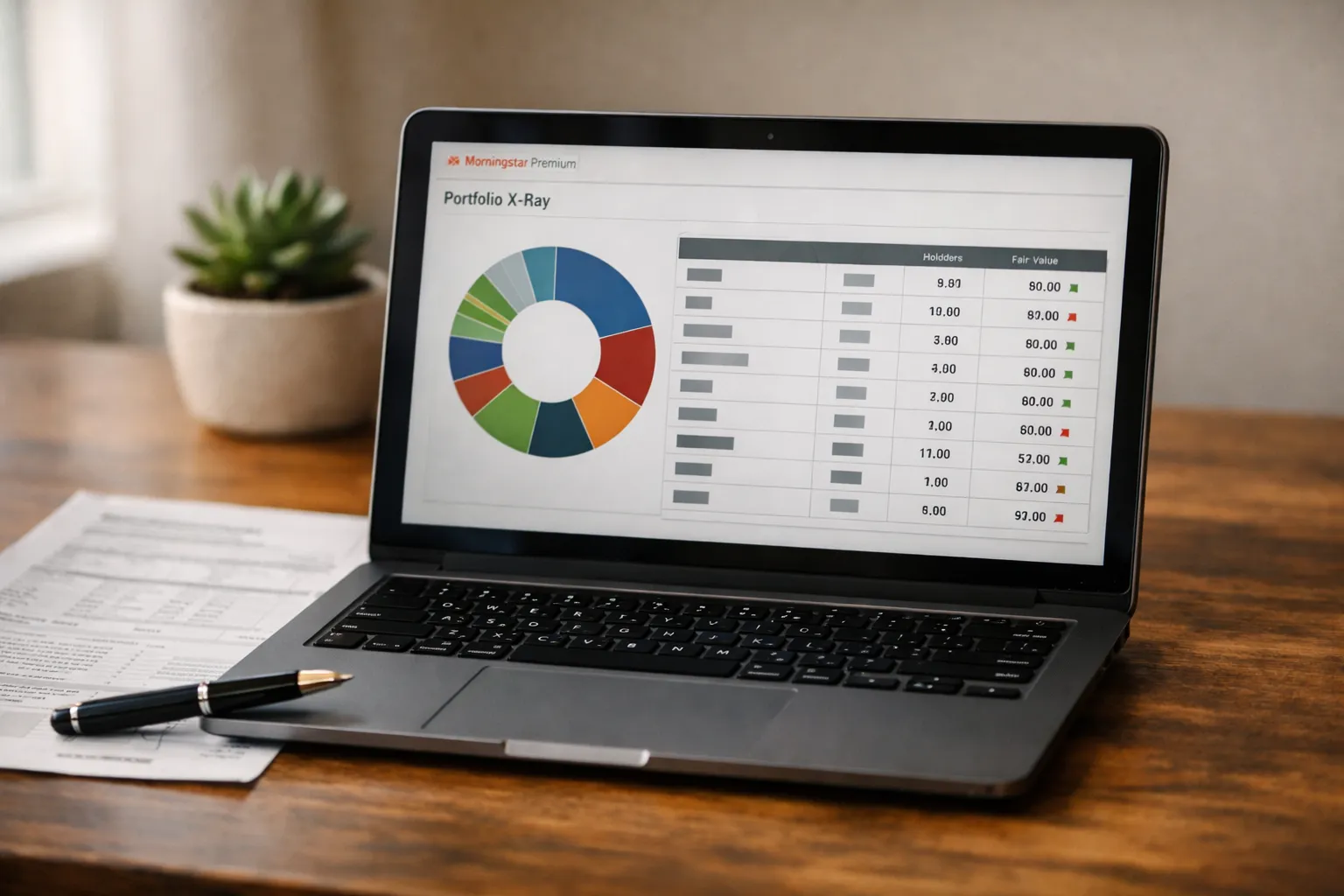
Morningstar Premium remains one of the most recognizable retail research subscriptions for stock investors in October 2026. This review evaluates the product’s core features — analyst reports, Morningstar’s fair‑value framework, Portfolio X‑Ray, stock screener and sustainability data — and explains where Premium adds real value for long‑term, fundamentals‑focused investors and where it falls short for active traders and quant builders.
What Morningstar Premium actually includes
- Analyst reports and star/analyst ratings: Full analyst writeups for many US and international names, the five‑star Morningstar rating, and the qualitative Analyst Rating (Gold/Platinum/Silver/Bronze/Negative).
- Fair‑value estimates and margin of safety: Morningstar’s discounted cash‑flow (DCF) models provide an intrinsic value estimate and a “wide/narrow” moat assessment when applicable.
- Portfolio X‑Ray and portfolio analytics: Holders can upload broker statements or manual lists to get asset‑allocation, sector exposures, dividend yields and overlap with Morningstar model portfolios.
- Stock screener and factor filters: Value, growth, profitability filters plus ESG metrics drawn from Morningstar/Sustainalytics data.
- Model portfolios and educational content: Themed model portfolios, analyst columns and tools that connect research to portfolio construction.
How it helps stock investors — concrete examples
Morningstar’s core strength is trusted fundamental research packaged for investors who want an independent check on market prices. Two practical examples:
- Fair‑value check: For a large, widely followed stock such as Apple (AAPL), Morningstar’s fair‑value estimate and moat commentary give a disciplined baseline for whether the market price already reflects future cash flows. That can stop you from “buying the story” at full price.
- Position sizing and overlap: Uploading a taxable account to Portfolio X‑Ray quickly flags concentration risks — e.g., heavy exposure to mega‑caps or overlapping factor bets — and shows tax‑aware turnover for hypothetical rebalances.
Strengths: Where Morningstar Premium shines
- Independent fundamental research: Morningstar’s analyst notes and qualitative ratings are straightforward, clearly stating assumptions and uncertainty — useful for long‑term decision making.
- Fair‑value focus: The DCF‑based fair‑value estimate is transparent and accompanied by a narrative — a helpful counterweight to momentum and short‑term market noise.
- Portfolio X‑Ray is practical: The tool surfaces concentration, sector and style exposures in plain language; it’s one of the better retail tools for understanding portfolio composition quickly.
- Integrated ESG data: Morningstar’s Sustainalytics integration means sustainability exposure is quantified alongside fundamentals, which helps investors inclined to integrate ESG without using separate platforms.
Limitations and notable cons
- Not for active traders: Morningstar is not a charting, high‑frequency or options analytics platform. Quotes can lag by a few seconds and there’s no trade execution inside Premium.
- Coverage gaps at the microcap level: Very small, thinly covered names may lack full analyst reports or robust fair‑value estimates; retail investors using Premium for microcap hunting will need additional data sources.
- Quant and backtesting constraints: While the screener is flexible, Premium is not a backtesting engine or a factor research lab — users who need rigorous historical testing will turn to Stock Rover, QuantConnect or institutional products.
- Occasional disconnects between price and fair value: Morningstar’s conservative fair‑value approach can keep many volatile growth names in “overvalued” territory for long stretches; that’s a feature for long‑term risk control, a frustration for momentum traders.
Pricing and value proposition
Morningstar sells Premium through monthly and annual subscriptions and periodically runs introductory offers; check Morningstar’s site for current pricing. The subscription isn’t cheap for a single tool, but it replaces a handful of services for investors seeking: reliable analyst writeups, intrinsic‑value focus, ESG integration and a practical portfolio analytics dashboard. If you primarily want live trade alerts, deep options analytics or sophisticated backtests, Premium is not the best single purchase.
Who should subscribe — and who shouldn’t
- Good fit: DIY long‑term stock investors who value independent fair‑value estimates, want plain‑English analyst judgment, and need a quick way to audit portfolio concentration and ESG exposure.
- Less suited: Active traders, options speculators, intraday chartists and systematic quants. These users need execution, advanced charting, or backtesting that Morningstar does not provide.
How I used it in practice
In testing, Portfolio X‑Ray’s overlap and taxable‑gain estimates forced clearer thinking about trimming outsized positions. Analyst reports helped validate long‑term thesis changes faster than reading dozens of quarterly transcripts. Where Premium adds the most practical value is bridging analyst conviction with portfolio action — e.g., combining fair‑value gaps with overlap to prioritize sell/trim candidates.
Bottom line
Morningstar Premium in October 2026 remains a compelling subscription for investors focused on fundamentals, valuation discipline and portfolio clarity. It’s not a one‑stop shop for every type of investor: active traders and quantitative researchers will need complementary platforms. For the buy‑and‑hold enthusiast who wants one reliable source of analyst insight, fair‑value discipline and usable portfolio analytics, Morningstar Premium is worth evaluating.