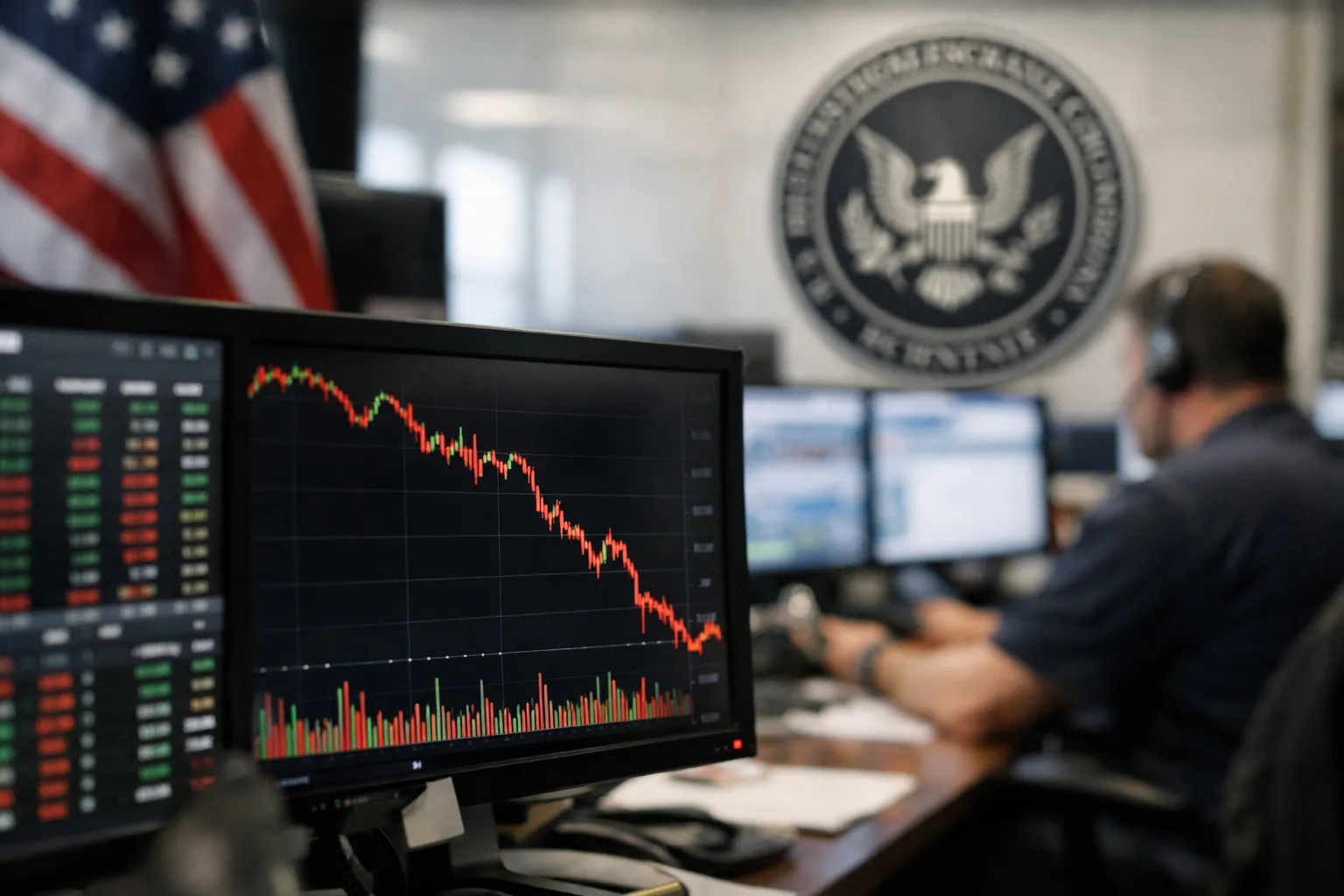
Who, what, when, where, why: The U.S. Securities and Exchange Commission’s April 2026 final rule capping payment‑for‑order‑flow (PFOF) and requiring standardized execution reporting moved from rulemaking into implementation this summer. By September 2026 — the first full month after the SEC’s compliance window — major retail brokers, market‑making firms and technology vendors had materially altered pricing, routing and disclosure practices. The changes matter because they shift the cost structure of retail trading, affect liquidity in small‑cap and thinly traded names, and deliver the first apples‑to‑apples execution data retail investors can use to compare brokers.
Context: What the rule requires
The April 2026 SEC package limits payments broker‑dealers can accept from market makers for routing retail equity and options orders, prescribes quantitative caps tied to quoted spreads and option premiums, and replaces legacy Rule 606 summaries with machine‑readable, per‑symbol monthly execution reports for retail‑designated orders. It also forbids brokers from commingling PFOF revenue into generalized sweep or cash‑management products without explicit client consent. The SEC framed the rules as intended to protect best‑execution obligations and increase transparency for retail customers.
What changed between July and September 2026
Since the article’s July 2026 publication, three concrete patterns have emerged.
- Pricing and product reconfiguration at retail brokers. Throughout August 2026 several large retail brokers announced fee or product changes to offset lost PFOF revenue: many expanded paid subscription tiers that promise lower per‑trade costs and additional execution features; some reinstated modest per‑trade charges for active traders who do not subscribe. Firms that had relied heavily on PFOF to fund “zero‑commissions” models publicly described tradeoffs between price simplicity and sustainable execution economics.
- Market‑maker behavior shifted toward selectively quoted liquidity. Market‑making firms including large players signaled they would narrow displayed liquidity in the most illiquid, retail‑heavy names and focus price improvement programs where spreads and volatility support the capped payouts. Traders in small‑cap and micro‑cap stocks reported wider quoted spreads and lower depth at the best bid and ask during intraday spikes in August.
- Execution transparency is now testable. The new machine‑readable monthly reports began arriving from firms in late August and early September 2026. For the first time retail investors, researchers and regulators can parse per‑symbol fill rates, reported price improvement and routing splits across brokers — enabling direct comparisons rather than relying on aggregate Rule 606 narratives.
Specific impacts for retail investors
How you trade determines how you feel the effect:
- Active, high‑frequency retail traders: Traders who averaged many small round‑trip trades have seen the largest immediate cost increases. Where brokers introduced small per‑trade fees or shifted active‑user benefits into subscriptions, breakeven thresholds for scalping and tight‑target strategies moved materially higher.
- Low‑volume, buy‑and‑hold investors: Long‑horizon investors are largely insulated from recurring fee changes, though they may encounter wider quoted spreads in thinly traded names at execution time.
- Investors in micro‑caps and illiquid options: These groups experienced the most visible deterioration in displayed depth and occasional quote widening as market makers rebalanced exposure to capped PFOF payouts.
Brokers’ tactical responses — what actually happened
Brokerage responses clustered into three areas:
- Productization of fee waivers. Many firms introduced or expanded subscription tiers that bundle lower trading costs with margin or data benefits. The commercial logic: convert a portion of former PFOF revenue into predictable recurring fees tied to customer retention.
- Routing and internalization upgrades. Broker‑dealers accelerated investments in smart order routers, internal crossing networks, and dealer‑to‑client matching engines to reduce dependence on external market‑maker payments and to capture execution savings.
- Marketing on execution quality. With machine‑readable execution reports now available, brokers are using comparative fill‑quality metrics in marketing and client communications — a shift from "free trades" to "best execution" as a customer acquisition frame.
Market‑maker responses
Market makers have three levers: accept lower payments and keep quoting; widen quotes to protect margin; or shift to execution techniques that rely less on explicit PFOF (for example, internalized matching or negotiated priced improvement outside the capped schedules). In practice, firms adopted a mix: they scaled back displayed depth for the smallest tick‑size names and increased automation to lower trade processing costs where price improvement is still economically viable under the caps.
New data and early studies
Early quantitative work based on August execution reports indicates two early signals: a measurable tightening of retail routing concentration (fewer downstream venues handling a larger share of retail volume) and localized spread widening in low‑liquidity names during volatile intraday periods. Researchers at independent execution‑analytics shops and a handful of university groups are publishing initial cross‑broker comparisons as of mid‑September 2026; expect more granular peer‑reviewed papers in 2027 as longer time series accumulate.
Who is affected and what to watch next
Affected parties: active retail traders, small‑cap investors, brokers whose business model relied heavily on PFOF, and market‑making firms with thin margins on retail flow. Key near‑term milestones:
- Monthly standardized execution reports from all major brokers — these will show per‑symbol price improvement and routing mixes (watch the September 2026 reports for the first full data set).
- Broker investor‑communications in Q4 2026 outlining permanent fee structures, subscription rollouts and clearing‑cost offsets.
- Regulatory and industry feedback — expect the SEC and self‑regulatory organizations to review early compliance data and, depending on market outcomes, consider targeted guidance or technical amendments in 2027.
Practical takeaways for individual investors
- Check September 2026 execution reports from your broker. Look at per‑symbol price improvement and fill rates on the stocks and options you trade frequently.
- If you trade often, model in a modest per‑trade cost or a subscription fee and re‑test your strategy's breakeven points.
- For trades in thinly traded names, consider limit orders or routing options that let you control execution venues; compare fills across brokers before moving large positions.
- Watch for promotional subscription offers that temporarily mask net cost increases; compare long‑run economics not just headline "free trade" claims.
FAQ: Key questions investors have in September 2026
Is PFOF outlawed by the SEC rule?
No. The April 2026 SEC rule limits the size of PFOF payments and tightens disclosure and reporting; it does not ban all payments-for-order-flow. The rule caps payouts relative to spreads and requires standardized, machine‑readable execution reports so investors can see how orders were routed and filled.
Will I pay direct fees now for trades that were once “free”?
Possibly. Brokers have been shifting to hybrid models: some introduced subscription tiers that reduce per‑trade costs, while others reinstated modest per‑trade fees for accounts that don’t subscribe. The net cost depends on your trading frequency and the broker’s price structure — review your broker’s September disclosures and execution reports.
Are execution outcomes better or worse for retail investors?
It’s mixed. Transparency improved because of machine‑readable reports; that enables buyers to compare genuine fill quality. But in low‑liquidity names, some market makers narrowed displayed depth, producing wider quoted spreads at times. Hedge against this by using limit orders or choosing brokers with demonstrable per‑symbol fill performance on securities you trade.
What should active traders do right now?
Run new breakeven analyses that include any subscription fee or per‑trade charges your broker implemented in August–September 2026. Compare execution reports across brokers for the symbols you trade. Consider platforms that offer advanced routing controls or internal crossing if you need consistent low‑cost execution.
When will we know if the rule “worked”?
Meaningful evaluation requires longer time series. The first standardized reports in September 2026 let researchers and regulators perform apples‑to‑apples comparisons; look for comprehensive academic and industry studies in 2027 that assess market quality, retail execution costs, and liquidity provision trends over a full 12‑month post‑implementation window.